Adire-Inspired Textiles: Style Indigo Without Overdoing It
What adire really is, why our prints are labeled inspired by, and the one-hero formula that keeps indigo pattern rich instead of noisy.
Disclosure: As an Amazon Associate I earn from qualifying purchases. How we earn.
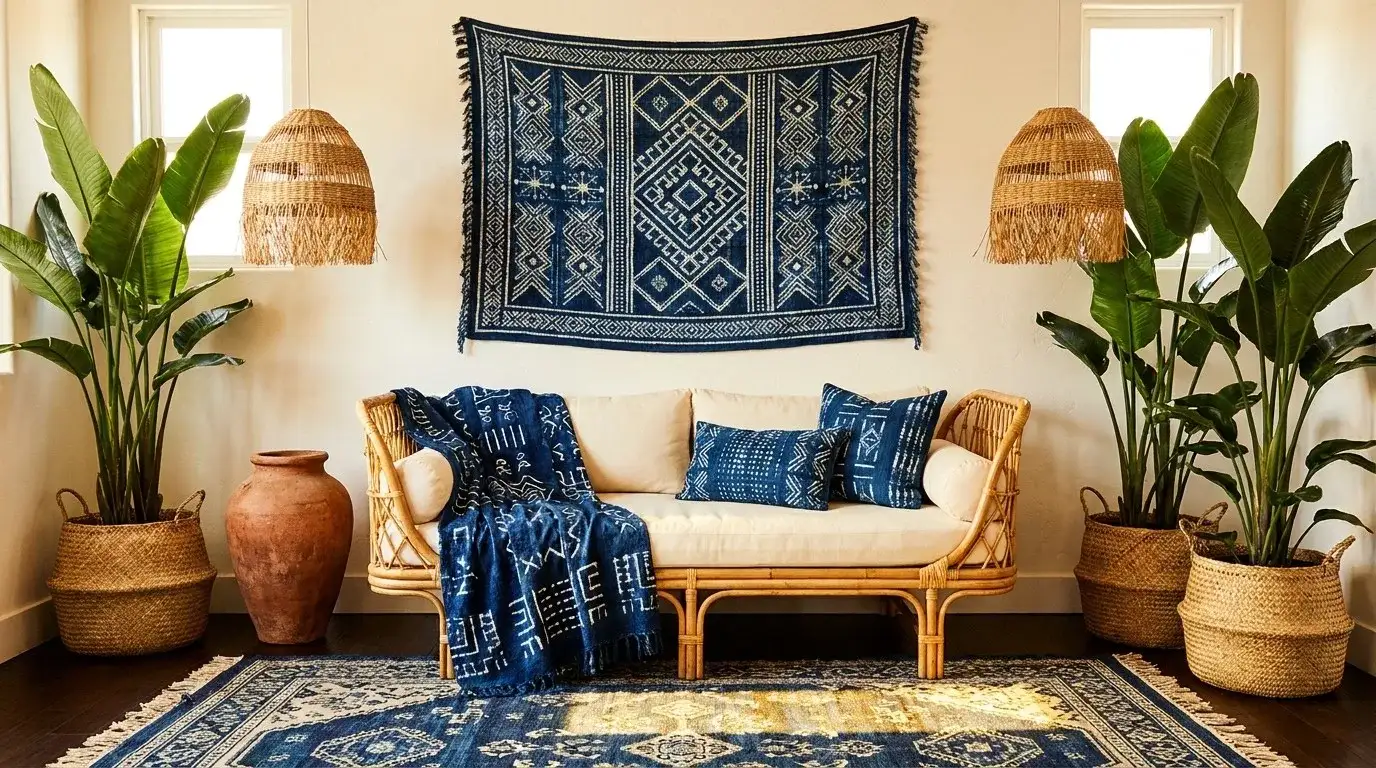
Indigo pattern is the strongest tool in this whole style — and the easiest to overuse. This is our Learn guide to using it well: what adire really is, why everything on this site is labeled “inspired by”, and the one-hero formula that keeps a bold indigo textile looking rich instead of noisy.
A note on textiles: what adire actually is
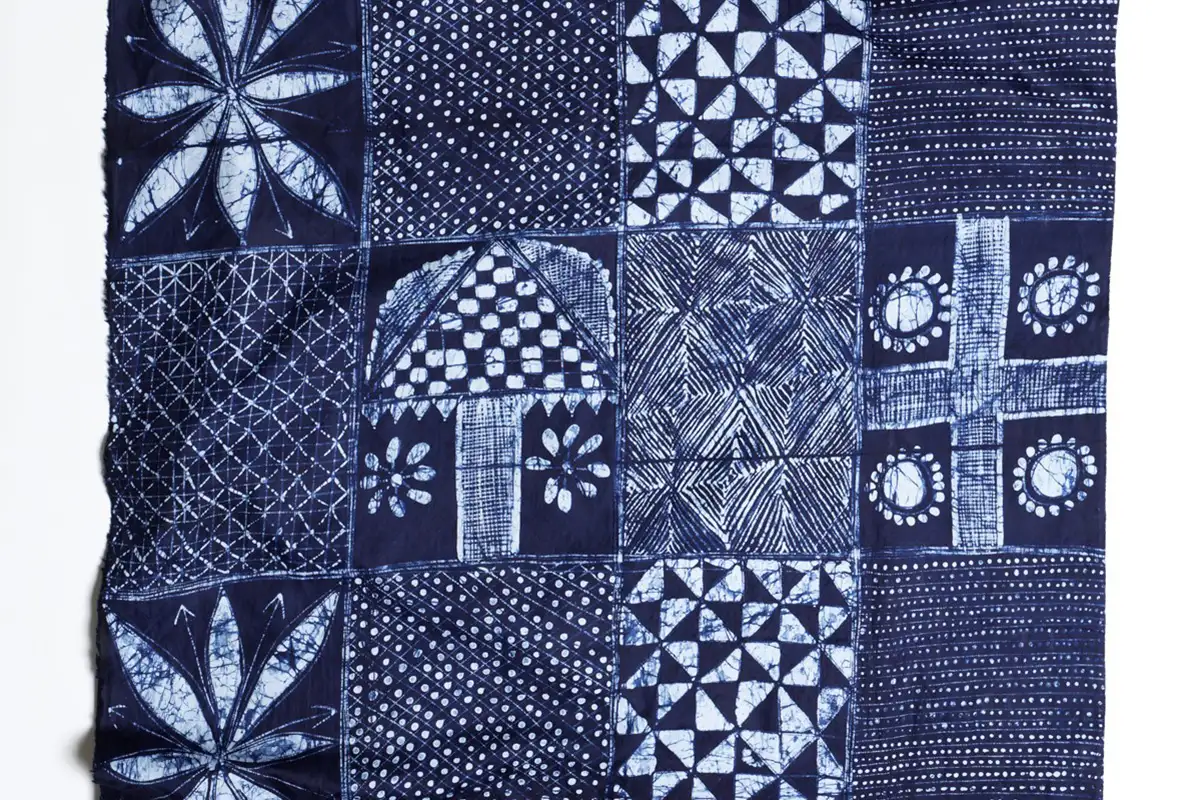
Adire is the indigo resist-dyed cloth of the Yoruba people of southwestern Nigeria. Traditionally made by Yoruba women — famously in Abeokuta — plain cloth is patterned before dyeing: cassava-paste designs painted or stenciled on by hand, raffia tied or stitched in as a resist, then the cloth is dipped again and again in indigo until it reaches that deep, living blue. Every genuine piece carries the small irregularities of a hand process, because it is one.
That is exactly why this site draws a hard line. The duvet sets, throws and pillow covers in our guides are factory-printed textiles inspired by adire patterns — good, affordable ways to live with the look, labeled “inspired by” in the product name and description, every time. None of them is adire cloth. If you want the real cloth, buy it from Yoruba makers and specialist sellers of genuine African textiles, and expect to pay for the hands that made it. We would rather teach you the difference than blur it.
How the pieces work together: one hero textile per view
Stand in the doorway of the room and take in one view. In that view, exactly one textile gets to be the hero — the bold indigo pattern your eye lands on first. Everything else in the view supports it in solids, stripes or much smaller-scale texture. A hero duvet means quiet pillows. A hero throw over the sofa means the cushions go solid indigo or cream, not a second pattern. The moment two bold indigo prints share a view at the same scale, they stop being heroes and start arguing.
- Hero at large scale, support at small scale. If the throw carries a big motif, any second pattern in view should be a fine stripe, a tiny dot or a woven texture that reads as solid from six feet away.
- Repeat the color, not the pattern. A solid indigo cushion next to a patterned indigo throw ties the set together without doubling the noise.
- Give the hero breathing room. Pattern needs a border of plain around it — the cream sofa, the bare wall, the undyed rug. Crowding is what “overdoing it” actually looks like.
Pairing indigo with neutrals and natural fibers
Indigo is a cool, deep color in a warm style, so its partners matter. Cream and warm white keep it from going cold; flax and undyed cotton echo the cloth it came from. Natural fibers do the warming work: rattan and bamboo add honey tones, seagrass and jute add dry texture, raw wood and terracotta pull the blue back toward earth. A reliable ratio for one view is roughly two-thirds neutral, one-quarter indigo (pattern and solid together), and a small remainder of warm accent — ochre, clay or brass.
- On a sofa: one hero throw, folded long over one arm; cushions in solid indigo and cream; a seagrass basket beside it for the texture note.
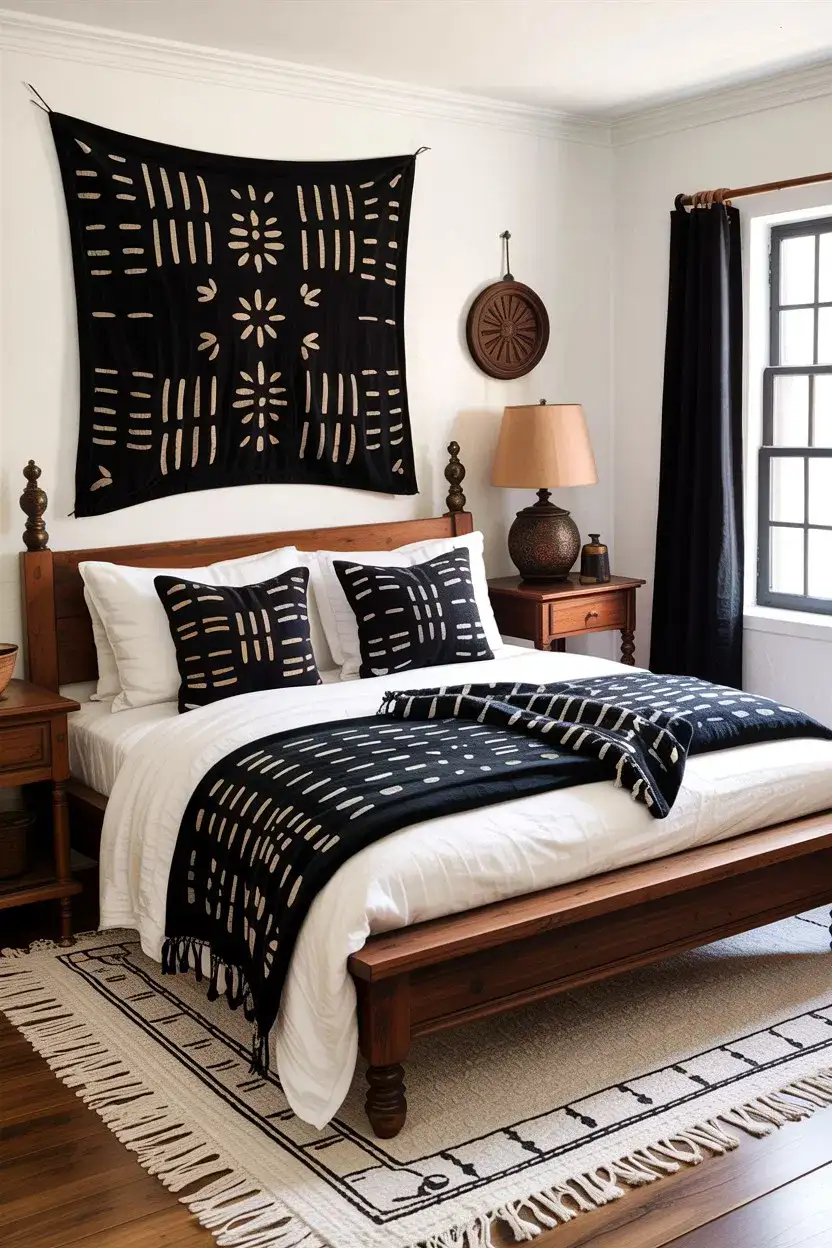
- On a bed: the hero is either the duvet or a runner across the foot — never both. White or cream sheets are the border that makes the indigo read.
- On a wall: one textile hanging, centered, with empty wall around it beats a collage of three. A wooden dowel or bamboo pole keeps it in the material family.
- At a table: an indigo runner on bare wood, plain clay or cream ceramics, no patterned napkins competing at plate level.
Three ways people overdo it
- Pattern on every surface. Duvet, cushions, curtains and rug all printed: the room has no rest, and paradoxically the pattern itself disappears into the noise.
- Five shades of blue at war. Indigo sits in a narrow, deep range. Navy, royal and denim-blue pieces bought separately will clash quietly all day — match new pieces against the hero textile, not against memory.
- Calling a print the real thing. Styling honesty counts too: a printed throw is a lovely object, and describing it accurately — inspired by adire — is what keeps this style respectful to the tradition it borrows from.
Care notes for indigo prints
Printed indigo-inspired textiles keep their depth longest washed cold, inside out, and dried out of direct sun. Wash new pieces separately the first few times — indigo-style dyes, like the real dye, can release a little color early on. Rotate a hero throw between the sofa and the end of the bed every few weeks: even wear, and the room feels refreshed for free.
Before you buy
Check the print scale on the listing against the view you are styling — a motif that reads bold in a product photo may read busy at room scale. Confirm dimensions, fabric content and care information on the retailer’s page before ordering. Prices and availability change daily; the price that applies is the one Amazon shows when you check out.
Shop the look — 4 pieces
- Hero textile
Adire-inspired indigo throw
The hero piece of this guide — a printed throw inspired by Yoruba adire patterns, labeled inspired by, not adire cloth.
Inspired-by design — not the traditional handmade cloth
Under $50 Check price on Amazon - Hero alternative
Adire-inspired pillow covers (set of 2)
The hero on a plain sofa — or swap to solids when the throw is out. Never two bold prints at full volume in one view.
Inspired-by design — not the traditional handmade cloth
Under $50 Check price on Amazon - Bedroom hero
Adire-inspired duvet set
The patterned layer for the bed, with plain cream sheets as its border and nothing else printed in view.
Inspired-by design — not the traditional handmade cloth
Mid-range Check price on Amazon - Wall hero
Adire-inspired wall hanging
One hanging, centered on a wooden dowel, with empty wall around it — the doorway view gets a single hero.
Inspired-by design — not the traditional handmade cloth
Under $50 Check price on Amazon
Materials: Adire-inspired textiles, Cotton