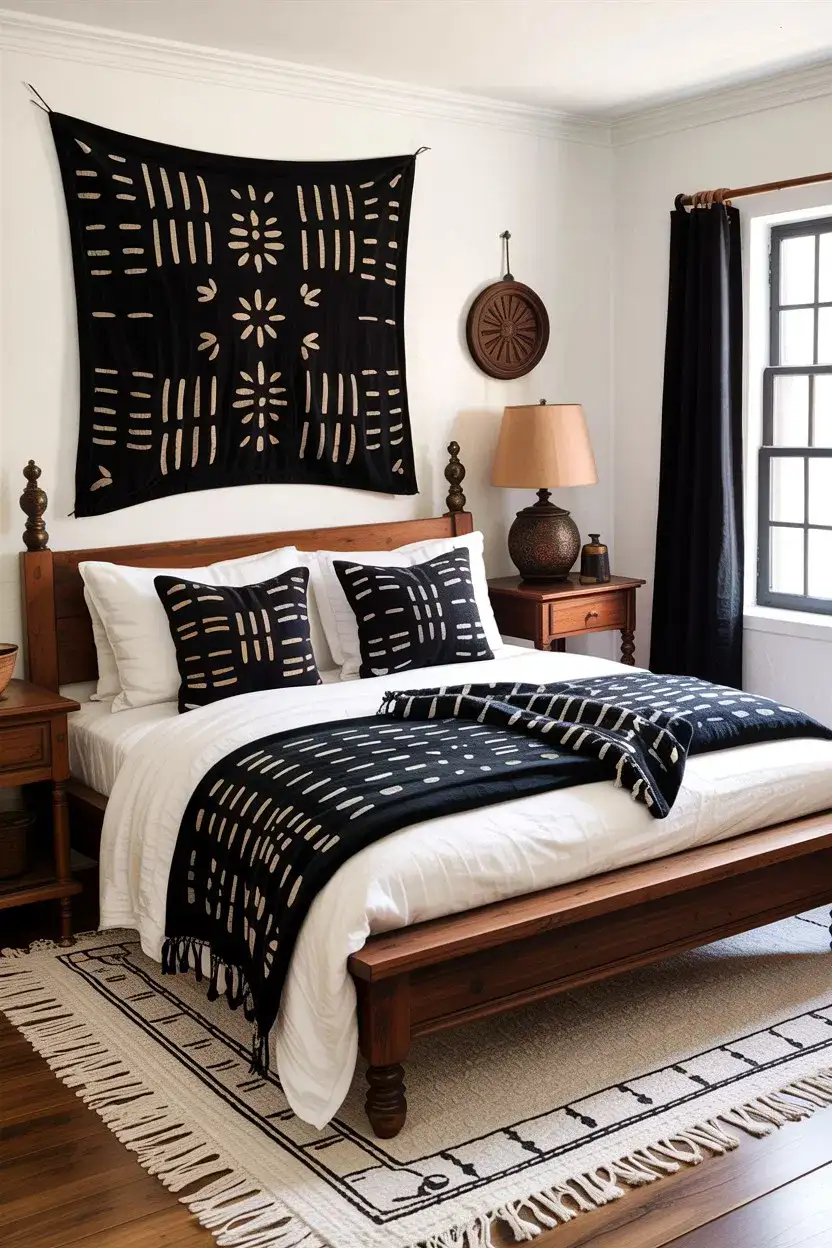
Adire-Inspired Bedding & Throws, Explained Honestly
Real adire is Yoruba cloth hand-dyed in indigo. Learn to tell craft from "inspired by" prints, and when each is worth it.
Disclosure: As an Amazon Associate I earn from qualifying purchases. How we earn.
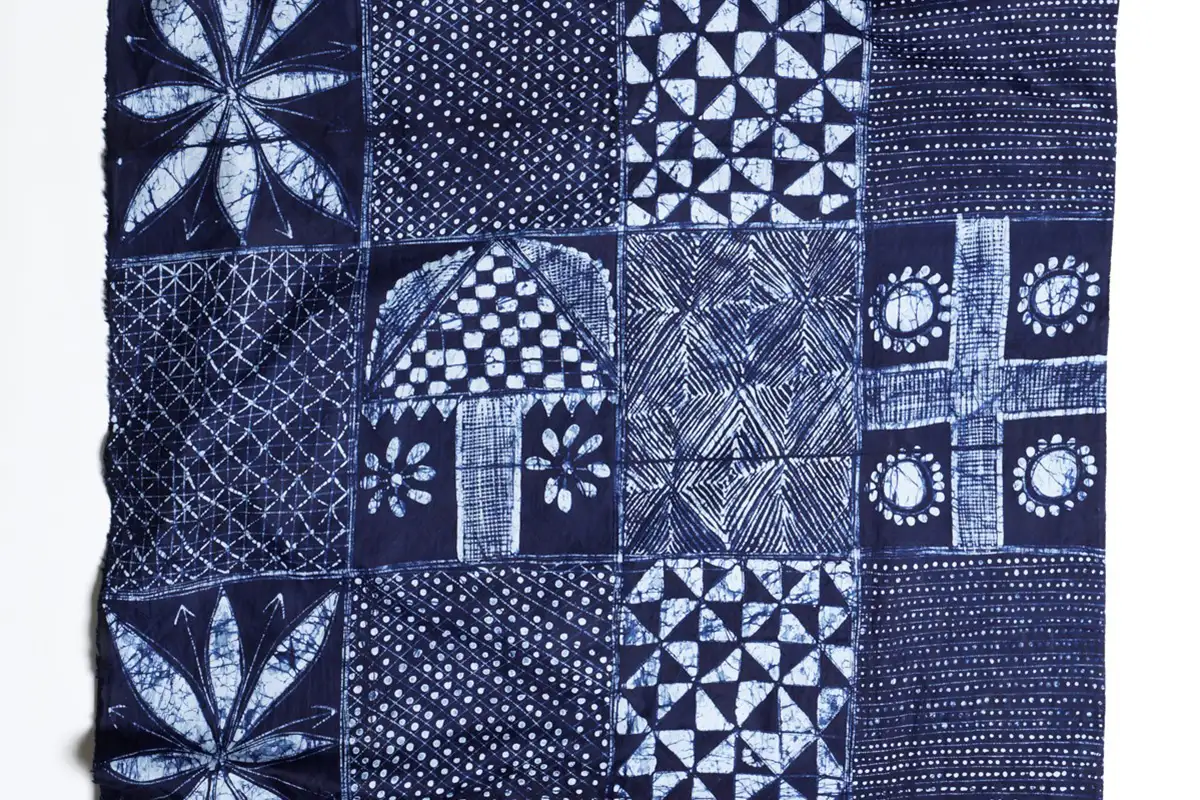
Adire is Yoruba cloth from southwest Nigeria, dyed in indigo with resist techniques: patterns are drawn in cassava starch, tied, or stitched before the cloth goes into the dye. Most bedding sold online under “adire” is a printed cotton that borrows the look. Both have a place in a room, as long as the label tells you which one you are buying.
Craft or “inspired”: how to tell
- Pattern. Hand-resist work has small irregularities: lines that thicken, repeats that drift. A perfectly identical repeat across a whole duvet is printed.
- Color. Natural indigo varies across the cloth and may rub off a little at first. Printed indigo is flat and even.
- Back of the cloth. Dyed cloth shows the pattern through the back almost as strongly as the front; a print is often pale on the reverse.
- The listing. A real adire piece will name a maker, a city (Abeokuta and Ibadan are known centers) or a cooperative. “Adire style” with no maker means inspired.
Everything in this list is labeled inspired. When we can list a piece from a named adire maker, we will add it with their name.
When each is worth it
Printed, inspired bedding is the right choice for anything you wash weekly: duvet covers, pillowcases, sheets. It holds up to machines and costs a fraction of craft cloth. A piece of resist-dyed adire is worth buying as the one special textile in a room: a throw, a wall hanging or a runner that is washed rarely and gently.
Styling notes
Use two pattern scales at most: a large one on the duvet and a smaller one on the throw. Keep the sheets white and add one undyed linen texture. Indigo looks richest next to natural fiber and warm wood, so pair it with rattan or a wooden frame rather than chrome or glass.
Before you buy
- Size: check duvet dimensions against your insert, not just the bed size label.
- Fabric and weave: cotton percale stays cool; sateen drapes heavier and shows print more sharply.
- Care: wash dark indigo prints cold and separately the first few times.
- Colorfastness notes on the listing, especially for light-colored sheets underneath.
We sort pieces into budget tiers by the listing price when we research them. Prices and availability change daily; the price that applies is the one Amazon shows when you check out.
Shop the look — 6 pieces
- Anchor
Adire-inspired indigo duvet cover set
The biggest surface in the room carries the pattern, so the rest of the bed can stay plain.
Inspired-by design — not the traditional handmade cloth
Mid-range Check price on Amazon - Contrast throw
Adire-inspired indigo throw with a different motif
A second indigo pattern at a smaller scale, folded at the foot of the bed; same color, different rhythm.
Inspired-by design — not the traditional handmade cloth
Mid-range Check price on Amazon - Calm layer
Washed cotton sheet set in white
Plain white sheets give the indigo somewhere to rest and make the pattern look intentional.
Under $50 Check price on Amazon - Pillows
Adire-inspired indigo pillow covers, set of 2
Repeats the duvet color at the headboard without adding a third pattern scale.
Inspired-by design — not the traditional handmade cloth
Under $50 Check price on Amazon - Texture
Natural linen lumbar pillow
A flat, undyed texture between the patterns, so the bed does not read as one block of print.
Under $50 Check price on Amazon - Bedside
Rattan nightstand with shelf
A natural fiber next to indigo is the oldest pairing in the niche, and it keeps the bedside light.
Mid-range Check price on Amazon
Materials: Adire-inspired textiles, Cotton